
Velkommen til utstillingsrommene til Digitaliseringsdirektoratet (Digdir) ⧉, med RDF-baserte maskinlesbare demoressurser!
Tilbakemelding: Vennligst registrer eventuelle tilbakemeldinger som Github Issues ⧉.
Forbehold: Demoressursene tilgjengeliggjort via de enkelte utstillingsrommene er kun ment for demo- og testingsformål.
Hoveddelen av teksten i utstillingsrommene er kun på engelsk.
Hensikt
Hovedhensikten med utstillingsrommene er å
-
demonstrere hvordan ulike RDF-baserte nasjonale spesifikasjoner brukes til å tilgjengeliggjøre maskinprosesserbare ressurser i henhold til spesifikasjonene;
-
demonstrere hvordan kryssreferere/-lenke mellom ressursene på tvers av spesifikasjonene;
-
gjøre tilgjengelig maskinprosesserbare ressurser for testing og demonstrasjonsformål.
Målgruppe
Utstillingsrommene er primært for deg som har et visst kjennskap til RDF, og når du f.eks.
-
implementerer en eller flere av de RDF-baserte nasjonale spesifikasjonene demonstrert i utstillingsrommene,
-
leter etter noen RDF-eksempler på bruken av spesifikasjonene,
-
leter etter noen "byggeklosser" (instanser i RDF) til å teste din implementering av spesifikasjonene,
-
eller bare lurer på hvordan ressursbeskrivelser (metadata) i henhold til spesifikasjonene kan se ut i RDF.
Utstillingsrommene er også ment for deg som er vår internasjonale kollega og som ønsker å lære om de norske RDF-baserte spesifikasjonene.
Oversikt over og kryssreferanser mellom utstillingsrommene
Vi har så langt følgende utstillingsrom, med kryssreferanser mellom utstillingsrommene:
-
Begreper: I dette utstillingsrommet vil vi demonstrere bruken av Forvaltningsstandard for begrepsbeskrivelser (SKOS-AP-NO-Begrep) ⧉ (norsk applikasjonsprofil av W3Cs SKOS ⧉), til å beskrive og tilgjengeliggjøre maskinprosesserbare begreper og begrepssamlinger.
-
Datasett, datatjenester osv.: I dette utstillingsrommet vil vi demonstrere bruken av Standard for beskrivelse av datasett, datatjenester og datakataloger (DCAT-AP-NO) ⧉ (norsk applikasjonsprofil av EUs BRegDCAT-AP ⧉), til å beskrive og tilgjengeliggjøre maskinprosesserbare beskrivelser av datakataloger med datasett, datatjenester og distribusjoner.
-
Datakvalitet: I dette utstillingsrommet vil vi demonstrere bruken av DQV-AP-NO ⧉ (Norsk applikasjonsprofil av W3Cs Data Quality Vocabulary ⧉), til å beskrive datakvalitet.
-
Informasjonsmodeller: I dette utstillingsrommet vil vi demonstrere bruken av Spesifikasjon for beskrivelse av informasjonsmodeller (ModellDCAT-AP-NO) ⧉ (norsk applikasjonsprofil av DCAT-AP-NO ⧉), til å beskrive og tilgjengeliggjøre maskinprosesserbare beskrivelser av informasjonsmodeller og modellkataloger.
-
Klassifikasjoner, kontrollerte vokabularer osv.: I dette utstillingsrommet vil vi demonstrere bruken av Spesifikasjon for klassifikasjonsbeskrivelser (XKOS-AP-NO) ⧉ (norsk applikasjonsprofil av DDIs XKOS ⧉), til å beskrive og tilgjengeliggjøre maskinprosesserbare klassifikasjoner, kontrollerte vokabularer, kodelister osv.
-
Tjenester og hendelser: I dette utstillingsrommet vil vi demonstrere bruken av Spesifikasjon for tjeneste- og hendelsesbeskrivelser (CPSV-AP-NO) ⧉ (norsk applikasjonsprofil av EUs CPSV-AP ⧉), til å beskrive tjenester og hendelser og tilgjengeliggjøre maskinprosesserbare beskrivelser.
-
Persistente URI-er: "Masternøkkelen" til utstillingsrommene er URI. I dette utstillingsrommet vil vi demonstrere en måte å implementere norsk URI-standard - Peikarar til offentlege ressursar på nett ⧉ (basert på EUs 10 regler for persistente URI-er ⧉).
-
Generiske dummy-ressurser: Ikke direkte relatert til noen spesifikke spesifikasjoner per se, inneholder dette utstillingsrommet noen gjenbrukbare, maskinprosesserbare og generiske dummy-ressurser som kan brukes som "byggeklosser" når du f.eks. tester din implementering av en gitt spesifikasjon.
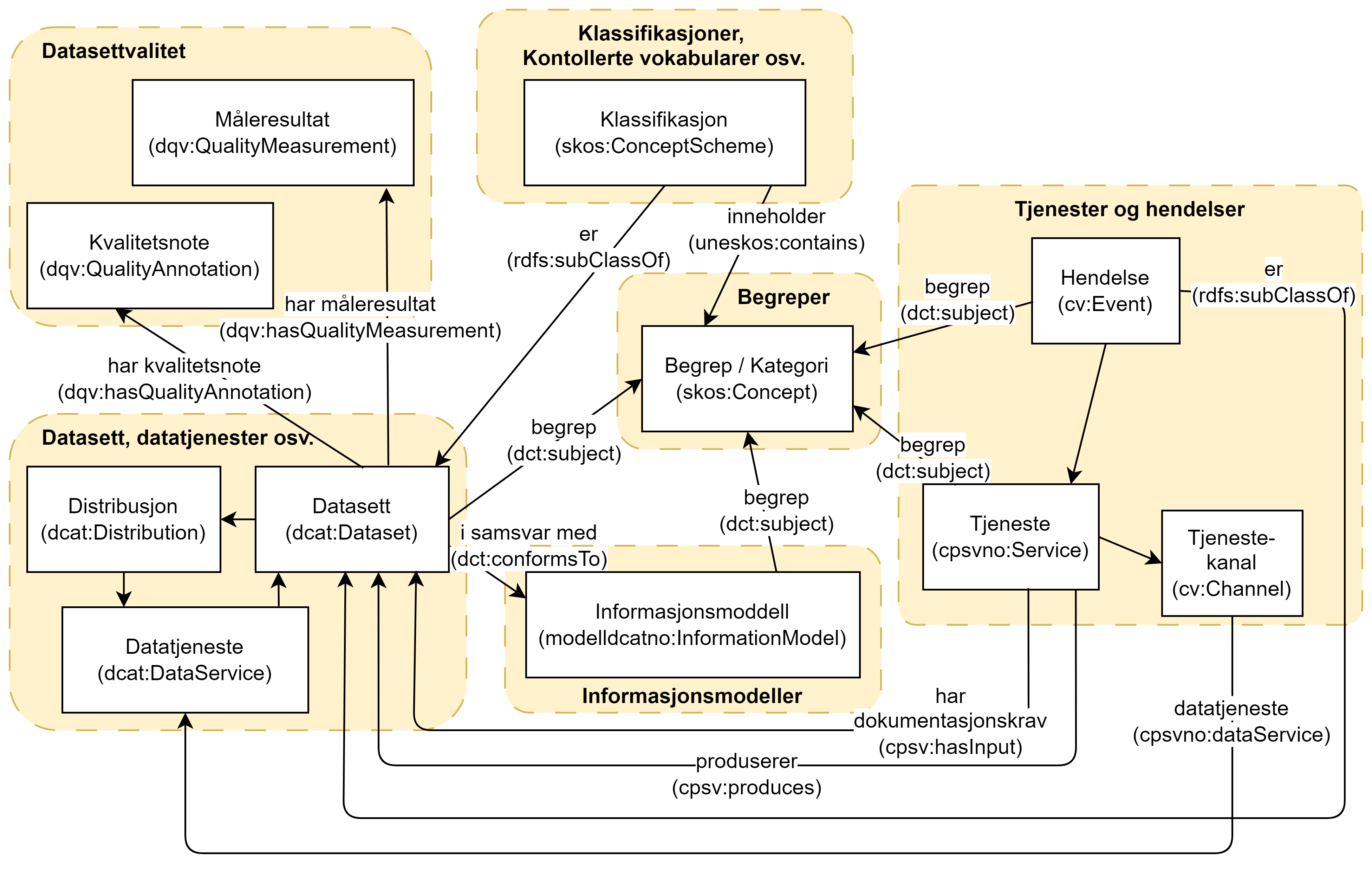
Figur 1 illustrerer noen av kryssreferansene mellom ressurstypene som er demonstrert i de ulike utstillingsrommene. Kryssreferansene vil bli forklart nærmere i de enkelte utstillingsrommene.
Å gjøre ressursene dine oppdagbare via en dataportal
Spesifikasjonene som det er demonstrert bruken av i de ulike utstillingsrommene her, spesifiserer også hvordan ressursbeskrivelser (metadata) tilgjengeliggjøres via en dataportal, f.eks. den nasjonale Felles datakatalog ⧉ forvaltet av Digitaliseringsdirektoratet (Digdir).
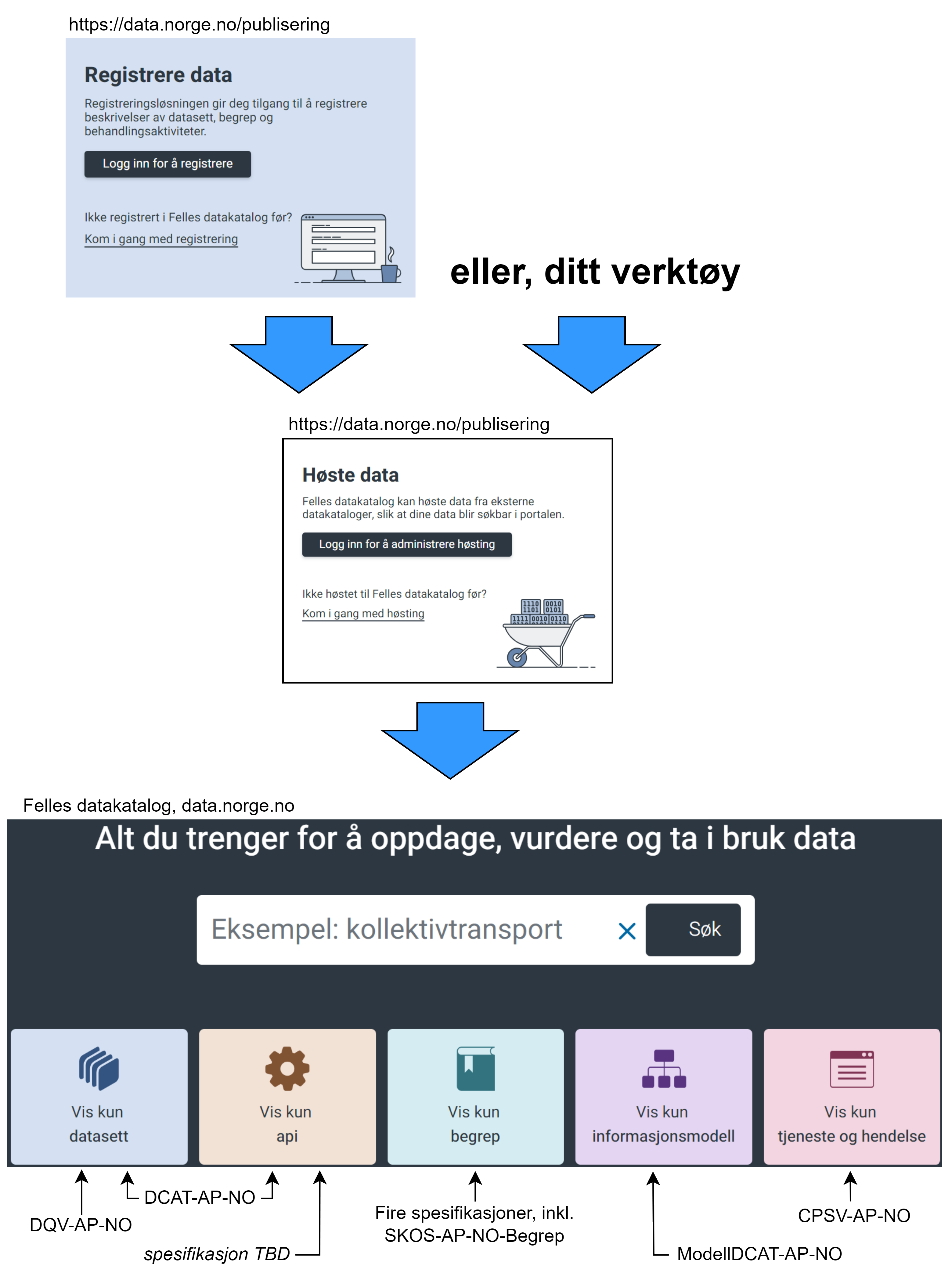
For å tilgjengeliggjøre ressursbeskrivelsene dine via Felles datakatalog, kan du, hvis du er autorisert til å gjøre det på vegne av din virksomhet,
-
bruke registreringsløsningen, til å registrere datasett, begreper osv., som vil automatisk bli innhøst til Felles datakatalog, eller
-
bruke høstingsløsningen, til å registrere hvor dine maskinprosesserbare ressursebeskrivelser er gjort tilgjengelige, for automatisk innhøsting til Felles datakatalog.
Dette er illustrert i Figur 2 som også viser bruken av de ulike nasjonale spesifikasjonene i Felles datakatalogen.
Digdir tilbyr også en demoportal ⧉. Demoportalen har de samme funksjonalitetene som i Felles datakatalog, men med innhold som er ment bare for testing og demo. Merk at du må være registrert bruker for å kunne bruke registrerings- eller høstingsløsningen av demoportalen.
Ved å bruke høstingsløsningen, er de aller fleste ressursene fra de ulike utstillingsrommene her allerede automatisk innhøstet til og dermed oppdagbare via demoportalen.
Eksempler på å finne demoressursene i demoportalen:
-
demoklassifikasjoner/-datasett: ved f.eks. å søke på "demodataset" i datasettdelen av demoportalen ⧉.
-
demobegreper (ikke ennå): ved f.eks. å søke på "demoCpt" i begrepsdelen av demoportalen ⧉.
-
demoinformasjonsmodeller: ved f.eks. å søke på "demomodel" i informasjonsmodelldelen av demoportalen ⧉.
Referanser
Noen av de RDF-baserte norske nasjonale spesifikasjonene for datadeling er:
-
CPSV-AP-NO ⧉: Spesifikasjon for tjeneste- og hendelsesbeskrivelser.
-
Kravene til RDF-representasjoner er også beskrevet på engelsk.
-
CPSV-AP-NO er basert på, og dermed en profil av, EUs Core Public Service Vocabulary Application Profile (CPSV-AP) ⧉.
-
-
DCAT-AP-NO ⧉: Standard for beskrivelse av datasett, datatjenester og datakataloger.
-
Spesifikasjonen er på norsk.
-
DCAT-AP-NO er basert på, og dermed en profil av, EUs BRegDCAT-AP ⧉.
-
-
DQV-AP-NO ⧉: Spesifikasjon for beskrivelse av datasettkvalitet.
-
Spesifikasjonen er på norsk.
-
DQV-AP-NO er basert på, og dermed en profil av, W3Cs Data Quality Vocabulary ⧉.
-
-
ModellDCAT-AP-NO ⧉: Spesifikasjon for beskrivelse av informasjonsmodeller og modellkataloger.
-
Spesifikasjonen er på norsk.
-
ModellDCAT-AP-NO er basert på DCAT-AP-NO.
-
-
SKOS-AP-NO-Begrep ⧉: Forvaltningsstandard for begrepsbeskrivelser.
-
Kravene til RDF-representasjoner er også beskrevet på engelsk.
-
SKOS-AP-NO-Begrep er basert på, og dermed en profil av, W3Cs SKOS ⧉.
-
-
XKOS-AP-NO ⧉: Spesifikasjon for klassifikasjonsbeskrivelser.
-
Kravene til RDF-representasjoner er også beskrevet på engelsk.
-
XKOS-AP-NO er basert på, og dermed en profil av, DDIs XKOS ⧉.
-
Noen RDF-baserte ressurser på nett:
-
Felles datakatalog ⧉, med oversikt over datasett, begreper, APIer, informasjonsmodeller, tjenester og hendelser.
-
Demoportalen - demoversjon av Felles datakatalog ⧉, med samme funksjonalitet som i Felles datakatalog, men innholdet er bare for testing og demonstrasjon.